

Austin exteriors take a beating. Humid summers grow algae, mold, and mildew on almost any surface, cedar pollen and dust settle onto façades after dry, windy Hill Country days, and daily foot and vehicle traffic grinds grime into concrete. So “how does pressure washing work” doesn’t have one answer. The right method depends on your property type and the surfaces involved.
Getting it right protects more than curb appeal. A clean exterior keeps walkways safe underfoot, keeps dumpster areas ahead of health-code standards, and protects the concrete and cladding you’ve invested in. We’re an owner-operated crew, so the same person who quotes your job is the one who does the work, on everything from a single storefront to a multi-story building.
The Two Methods: High Pressure vs. Soft Washing (and Why the Difference Matters)
There are two ways to clean an exterior surface, and each one is right for a different job.
High pressure, run through a surface cleaner, handles durable horizontal surfaces: concrete flatwork, sidewalks, drive lanes, and dumpster pads. These surfaces are dense and can take the force. Soft washing uses low pressure with a cleaning solution instead, and it’s the right call for facades, stucco, EIFS, vinyl, painted metal, signage, awnings, and every roof.
The two methods also clean differently. Soft washing kills the organic growth at the root with a cleaning solution, so the surface stays clean longer, while high pressure only lifts what’s sitting on top. Running one high setting across every surface is what causes damage, so we match the method to each material. We break down why we soft wash instead of blasting every surface in more detail.
Grease is its own challenge, and heat is the answer. A cold rinse just pushes grease around, so drive-throughs, dumpster pads, and fuel forecourts get hot water and a degreaser that break it down for good.
| Surface or Area | Recommended Method | Why |
|---|---|---|
| Concrete sidewalks, drive lanes, dumpster pads | High pressure with surface cleaner | Dense surface, physical buildup, safe to use force |
| Stucco and EIFS facades | Soft wash (low pressure) | High pressure gouges the surface and drives water behind cladding |
| Vinyl, painted metal, signage, awnings | Soft wash (low pressure) | Force strips the finish and pushes water behind panels |
| Roofs (metal, tile, shingle) | Soft wash only | High pressure removes granules and voids warranties |
| Drive-throughs, dumpster pads, fuel forecourts | Hot water with degreaser | Cold water spreads grease; heat dissolves it |
| Brick and block | Depends on age and condition | Can go either way, a judgment call on site |
We soft wash homes and roofs, treat soft local materials like limestone with extra care, and carry a hot-water unit, surface cleaner, and reclaim system for commercial work. If you want the full picture on our whole-building approach, our commercial building washing page walks through it.
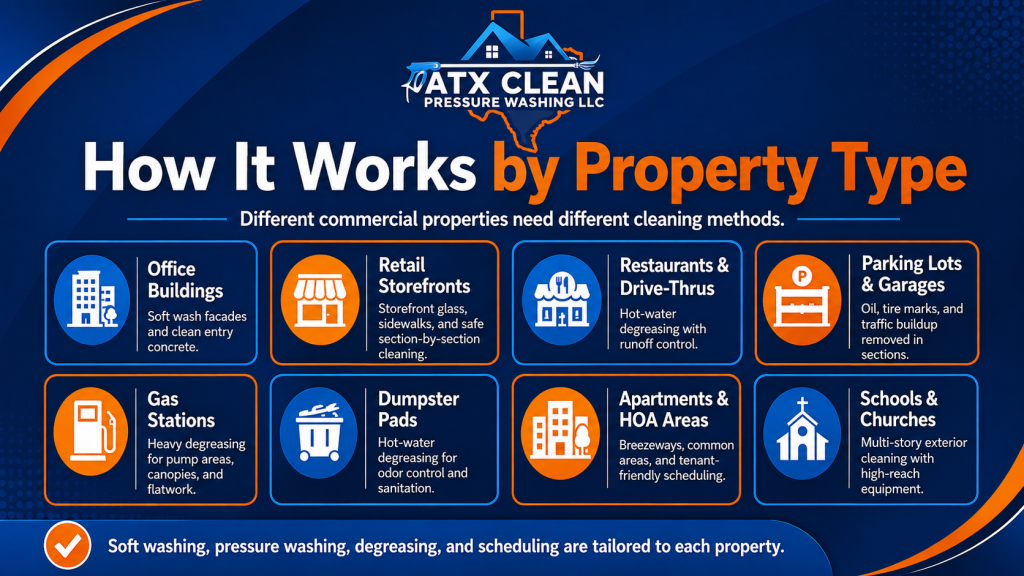
How It Works by Property Type
Different properties collect different messes, and each one calls for its own mix of methods. Below is what the job actually looks like for the most common commercial types we clean.
Office Buildings and Professional Plazas
Facades pick up algae streaking and pollen, so they get a soft wash. Concrete entrances and walkways get pressure washed, and glass and signage are handled gently. The main challenge is timing the work around your business hours so tenants and visitors aren’t disrupted.
Retail Storefronts and Shopping Centers
Entryways, walkways, and storefront glass drive the first impression a shopper gets. Sidewalks collect gum and foot-traffic grime that needs real cleaning, not a light rinse. We work in sections with cones so shoppers keep moving safely while we clean.
Restaurants and Drive-Throughs
Grease is the enemy here. Drive-through lanes and service areas build up cooking grease that a hot-water degrease lifts cleanly, and we capture the runoff as we go so nothing greasy is left on the pad or the pavement.
Parking Lots and Garages
Oil stains, tire marks, and general traffic buildup are the usual suspects. Multi-level garages get cleaned in sections around moving vehicles, with cones and drain protection in place to keep the site safe and the runoff contained.
Gas Stations and Fuel Forecourts
Forecourts, canopies, and the flatwork around the pumps hold oil and grime that only heavy degreasing lifts. These sites see the toughest fuel and oil residue we handle, so a thorough degrease is where the work is won.
Dumpster Pads and Enclosures
Grease and organic buildup cause odor, attract pests, and create real health-code risk. A hot-water degrease clears it and keeps the enclosure sanitary, which is why these are among the most frequently cleaned areas on any commercial property. Our dumpster pad cleaning handles the degreasing and the runoff together.
Apartment Complexes and HOA Common Areas
Breezeways, shared hardscape, and common structures are the usual scope. This work lives or dies on coordination with property management for scheduling and tenant notice, and we accommodate tenants on site as we go. Our apartment complex exterior cleaning and HOA common-area cleaning pages cover how we schedule around residents.
Schools and Churches
These properties are larger and often multi-story. Our equipment reaches up to 60 to 70 feet, so we clean churches and multi-story buildings top to bottom in a single visit.
Where the Dirty Water Goes: Austin’s Runoff Rules
Most vendors skip this part, and skipping it is what puts a property owner at risk.

In Austin, wash water that carries pollutants or cleaning compounds can’t be discharged into the storm sewer untreated. That’s set out in the Austin City Code, and wastewater is only allowed into the sanitary sewer under specific conditions. Austin Watershed Protection oversees it, and you can reach them at 512-974-2540. On top of the city rule, the federal Clean Water Act and Texas environmental requirements add their own layers for oily and grease-contaminated commercial runoff.
This matters to you as the property owner: when wash water illegally enters a storm drain, the fine typically lands on the owner, not the cleaning company. A vendor who cuts this corner isn’t just doing a worse job. They’re transferring a compliance liability onto you.
We handle the water the right way from start to finish. We plug off drains with sandbags and equipment, set containment booms down-gradient, and recover the dirty water with a reclaim system before disposing of it properly, and we stay current on each city’s environmental guidelines and bans. Austin Watershed Protection publishes a pressure washing runoff guide if you want to read the rules directly.
How Often Each Property Type Needs Cleaning
Frequency comes down to traffic, industry, surface, and Austin’s humid climate. North-facing and shaded surfaces regrow organic staining faster than sun-exposed ones, so they often need a tighter cycle. The table below is general guidance. Your property may need more or less.
| Property Area | Typical Cleaning Frequency |
|---|---|
| Dumpster pads and enclosures | Monthly (restaurants may need more) |
| Drive-through lanes | Monthly |
| Parking lots and garages | Quarterly to annually |
| Sidewalks and entrances | Quarterly |
| Building facades | Annually to bi-annually |
| Awnings and canopies | Bi-annually |
For commercial properties, we can set up a recurring maintenance schedule that keeps everything on a steady cadence and takes the planning off your plate. We cover why regular commercial cleaning pays off for Austin businesses separately.
Timing It to Austin’s Calendar: When to Schedule
Knowing how often is half the picture. Knowing when makes each cleaning work harder.
Late spring is the time to clear cedar pollen and accumulated dust off façades before the summer heat bakes it on. Heading into early summer, it’s worth knocking back algae, mold, and mildew before the humid season lets it root into porous surfaces, since a soft wash kills it at the root and slows the regrowth. Fall is for clearing seasonal buildup and getting surfaces ready for cooler months.
Beyond the seasons, some timing is driven by events. A health inspection, a tenant move-in, a lease-up push, or a busy retail season are all good reasons to get ahead of the cleaning. We work year-round and can move quickly on last-minute requests when a property needs to look right before a specific date.
How to Vet a Commercial Pressure Washing Vendor
Not every crew with a pressure washer is ready for commercial work. A few questions up front will tell you who is, and the table below pairs each one with the reason it matters.
| Ask Your Vendor | Why It Matters |
|---|---|
| Are you insured, and can I get a certificate? | Protects you from liability for damage or injury on site |
| How do you handle wastewater and runoff? | An untreated storm-drain discharge fine lands on you, the owner |
| Do you match the method to each surface? | Wrong pressure gouges stucco, strips signage, and voids roof warranties |
| How do you work around an open business? | Traffic control and off-hours scheduling keep customers and staff safe |
| Can you share commercial references? | Commercial work is a different skill set than residential |
One more signal is worth watching for: a real quote reads like a plan, not a guess. When you hire us, you get the owner on every job, not a rotating crew, backed by commercial equipment that reaches up to 60 to 70 feet, and we walk the finished result with you before we ask for payment. Our roof cleaning also carries a two-year results guarantee.
What a Real Commercial Quote Looks Like
A commercial quote should read like a maintenance plan, not a number scribbled on the back of a card. It should spell out the surfaces to be cleaned, the method for each, how often, the wastewater and containment plan, and proof of insurance.
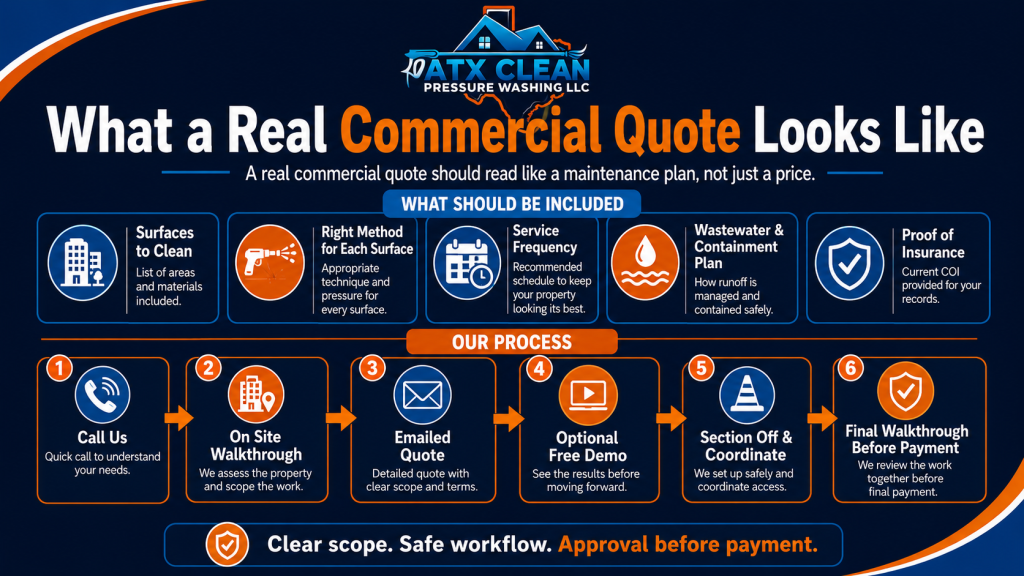
Our commercial process is straightforward. It starts with a phone call, then an in-person walk of the property so we can see what we’re actually dealing with. We email the quote back after the walk, and when it helps, we’ll run a free demo on a small test area so you can see the result before committing.
Your business keeps running while we clean. We section off the site, coordinate with your on-site managers, and clear large debris before we start so nothing goes flying, then we finish by walking the result with you for approval before any payment is due.
Frequently Asked Questions
Do you need a permit to pressure wash a commercial property in Austin?
There’s no standard city permit just to pressure wash, but the wastewater itself is regulated. Water with cleaning compounds or pollutants can’t legally enter storm drains untreated, so a compliant crew contains and recovers that water instead of rinsing it into the nearest drain.
Can you pressure wash while my business stays open?
Yes, and most of our commercial jobs are done exactly that way. When your hours don’t leave room, we can shift to early mornings or off-hours so the work never interrupts your customers or staff.
What’s the difference between residential and commercial pressure washing?
Commercial work involves larger surfaces, tougher contamination like grease and oil, height and traffic considerations, and stricter runoff handling. It calls for commercial-grade equipment and a plan for containment and scheduling that a typical home wash doesn’t require.
Will pressure washing damage my stucco or signage?
Only if a crew uses the wrong method, which is exactly what a surface-matched approach prevents. We soft wash stucco, EIFS, painted metal, and signage at low pressure, so they come clean without the etching or peeling that high pressure can cause.
How much does commercial pressure washing cost in Austin?
Commercial jobs are custom-quoted after an in-person property walk, since the price depends on the surfaces, square footage, contamination, and access. That’s why we’d rather see the property in person than guess at a number online.
Get a Quote for Your Property in Austin Today
Whether you manage a single storefront or a multi-story building, we’ll clean it the right way and keep the job compliant and safe.
Give us a call at (512) 379-6087 and we’ll set up a property walk. You’ll get a clear scope, honest pricing, and a crew that stands behind the finished result. Reach out today and see what a hands-on, owner-operated clean looks like.

